Structured Processes Analysis
Structured process analysis is defined in the textbook as the one that follows a standard operating procedure. or standardized which is only set to one thing. The structured process we will be focusing on within an Amazon Sortation Center is how the package distribution works. In an Amazon Sortation Center, there are various processes for a package to go through as it's listed in the following order.
1. Inbound (receiving trucks)
2. Unloading (packages have to be taken out)
3. Separation of packages
4. Scanning and Wrap down
5. Placement of packages
6. Filling trucks with packages or carts/pallets
7. Outbound (discharging trucks to other warehouses) 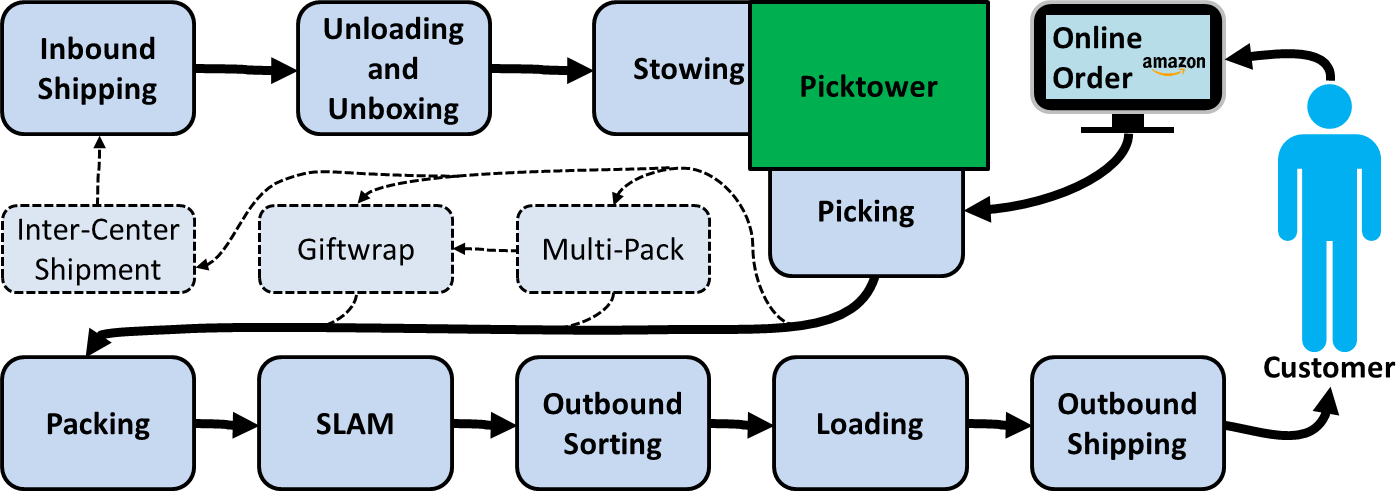
With this we see that the Sortation Center sticks to a certain process where each worker is there to follow through with it. Scanning is one of the essential parts throughout the process as a misuse of scans can lead to package loss.
This process may fall into an inter-enterprise scope as Amazon is one of the largest known companies. Within a Sortation Center they still have to rely on other companies to help receive packages and distribute packages towards another warehouse. Also Amazon has several companies working well within the delivery scene as FedEx, UPS, DHL, and many more companies are helping Amazon distribute the packages after the entire process.
With this process it may be very efficient for the warehouse as a Sortation Center is one for the most crucial process of deliveries. As it's the final part of all the package process to provide a quick and efficient delivery to customers, but in some cases the given process may have some issues within it. Some of these issues would be packages being destroyed, lost and even stolen. And with the Inbound area, sometimes weather may affect the time for deliveries to be on time making some deliveries be late. A way this problem can be resolved would be with advanced packaged sorting technology.
Amazon's Information System
With the processes listed above, we can see that there requires some type of IS for the process to be efficient.
The 5 types of Information Systems Amazon uses would be :
Zebra Mc3000xx, Zebra TC51, and TC70 - These would be the hardware given in the warehouse for the workers to scan packages and have all the information given from the package to be collected and stored onto their database.

Data can be collected with the hardware and then stored into the software giving operating managers the full view on package counts, package information, package details, etc. These data are then used for workers to then transport where each package needs to go
For people, workers are known for the people to provide the warehouses with labor and the usage of these hardware and software. They are given tasks to complete and a set goal for the warehouse to function fully.
For procedures in the warehouse, the workers are explained how to complete and use these hardware and software. They are given days to learn and train and on some occasions they do a learning check to see if everyone is capable of using these equipment.
Based upon the textbook CRM is Customer Relationship Management where combining information and IS having all info together within a database. Amazon’s CRM system tracks orders, shipping status and service requests through data analytics to improve customer experience, prediction of needs and solutions to issues quickly. Improving customer satisfaction when it comes to managing delivery expectations.
ERP is defined as Enterprise Resource Planning which is the collection of all databases from different departments into just a single database. Even though Amazon uses a highly customized system at the Sortation Center an ERP could include the use of managing workers, optimizing equipment use for an increased efficiency and keeping track of packages. The major ERP vendors are SAP, Microsoft, and Oracle which were mentioned during class in unit 4 structure processes, organizations and IS.
Lastly EAI stands for Enterprise Application Integration and overall uses a server like a website which connects other databases through a main base to share all data collected from other departments. Amazon uses this through IS like Amazon Aurora and WAO, which connect to external partners such as FedEx and UPS. Allowing smooth communication from sharing real time data such as package locations and delivery times, known to be critical in an inter-enterprise scope.
Establish within class an inter-enterprise IS intertwine systems between different organizations bringing capabilities to collaborate with each other smoothly. In Amazon they include connections to third-party logistics such as FedEx, UPS, and others managing to exchange data on deliveries. Following their own systems they ensure to have seamless handoffs between internal operations and external companies creating accurate package tracking and timely deliveries. Without a doubt Amazon should have an inter-enterprise IS with the reliance to other providers on completing delivers ensuring there is a efficient coordination is crucial, which reduces delays, increase transparency and positive customer experience.
Comments
Post a Comment